
 In this month's edition:
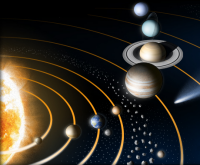
- Planetary Skylights.
- February Meteors.
- February Night Sky.
- February 2024 Sky Charts.
- Log in to post comments
In this month's edition:
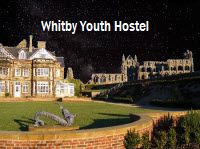 We have several Star Party/Outreach events scheduled for the New Year, whether conditions are suitable for observing, or not.
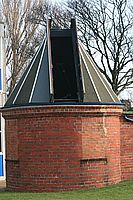 This monthly feature chronicle's the observing high's and low's experienced at the Bruce Observatory over the preceding month. [Read more about Bruce Diary - December]
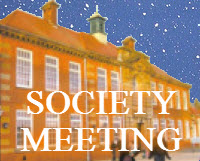 Monthly meetings of WDAS have now resumed at Caedmon College - Normanby Campus, the first meeting of 2024 being on Tuesday January 9th from 7:30pm. Richard Darn will be our guest speaker - ‘North York Moors Dark Night Survey’, being the subject. Richard, an experienced astronomer delivers astronomy events across the region in support of numerous locations and organisations.
He advises on dark sky designations, having helped Northumberland National Park, Yorkshire Dales National Park, and North York Moors National Park achieve dark sky status with the International Dark-Sky Association. Richard also helped launch Kielder Observatory and co-founded the popular Kielder Forest Star Camp. [Read more about Society Monthly Meetings - January Speaker - Richard Darn ]
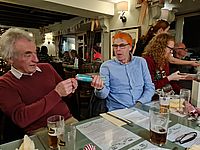 Society members gathered for the 2023 Christmas meal as another year slipped by. [Read more about Society Solstice Celebration Meal 2022]
In this month's edition:
 The 2023 WDAS Christmas meal has been booked for December 8th - HARE AND HOUNDS - Hawsker. See details within. [Read more about Society Christmas Meal 2023]
Monthly meetings of WDAS have now resumed at Caedmon College - Normanby Campus, the next meeting being on Tuesday December 5th from 7:30pm. Phil Richards will be giving a presentation on the restoration of the Watson Refractor. [Read more about Society Monthly Meetings - Speakers - December and January ]
In this new monthly feature, we chronicle the observing highlights, or otherwise, experienced at the Bruce Observatory over the preceding month. [Read more about Bruce Diary]
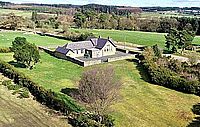 With yet another storm hammering the UK, heavy rain, flooding, and strong winds did not make for easy preparations. The intended, shorter travelling route was impassable, and for a while the event's viability was in the balance. Matters did however turn in our favour.
The event at the Whitby Youth Hostel on Oct 30th could so easily have been yet another casualty to one of the storms that have plagued the UK this autumn. However, matters turned out better than expected...especially considering Mark forgot to bring the eyepieces…Doh!
In this month's edition:
The event at the Whitby Youth Hostel on Oct 30th could so easily have been yet another casualty of the recent wet conditions and generally unsettled theme. In the end matters turned out as well as could be expected... considering Mark forgot to bring the eyepieces! Doh!
Full report next month.
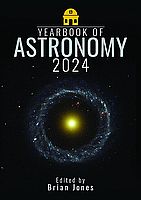 The next edition of the Astronomy Yearbook 2024 has now been published. If you would like to order a copy, John McCue will be obtaining a number of them shortly . [Read more about Yearbook of Astronomy 2024]
The 2023 WDAS Christmas meal will soon be booked, (sometime after the Novemeber meeting), so if you would like to come along please contact Mark - details within. [Read more about Society Christmas Meal 2023]
| Sun | Rise | Set |
|---|---|---|
| Actual | 07:20 | 18:18 |
| Civil Twilight | 06:44 | 18:54 |
| Nautical Twilight | 06:03 | 19:35 |
| Astronomical Twilight | 05:21 | 20:17 |
| Moon | Rise | Set |
|---|---|---|
| 05:50 | 17:35 |

