
The first Sunday evening of April (5th) delivered clear skies, although Mark, Keith and John L journeyed up to the Bruce Observatory under light skies still. Arriving at 8:15pm, before entering the observatory a little time was spent scanning the west and SW horizon, noting Venus, Sirius, Rigel, Betelgeuse and much higher up, Jupiter. Venus was unfortunately hidden from the Cook refractor by the adjacent school block, this 'temporary' edifice now approaching 60 years old. Speaks volumes!
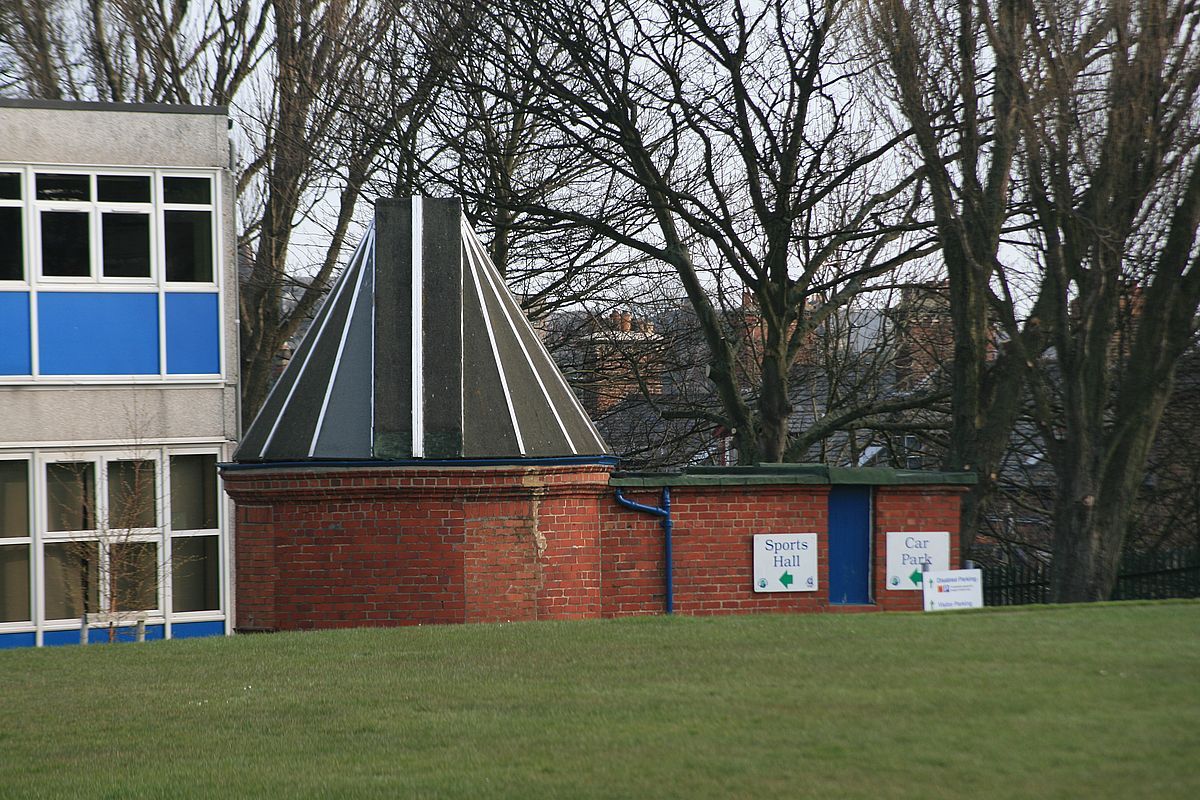
The Bruce Observatory. (Click for larger image)
Having noticed the observatory dome flaps were not sitting correctly at the top and with little breeze, both flaps were fully opened. Jupiter was our initial, and only target that evening, the intention being to carry out a specific set of tests concerning various eyepieces at the disposal of the society.
Starting with a selection of unbranded 10mm-12.5mm eyepieces with varying eye relief distances, most gave surprisingly reasonable views, probably a result of the more forgiving long focal length of the Cooke refractor. Some were decidedly inferior.
Next came a selection of more expensive eyepieces, including an unbranded 12.5mm ED eyepiece the society had purchased from Leeds Astro meet several years ago, a 10mm Baader Hyperion belonging to Keith, and an 11mm 82-degree Explorer Scientific eyepiece Mark had borrowed.
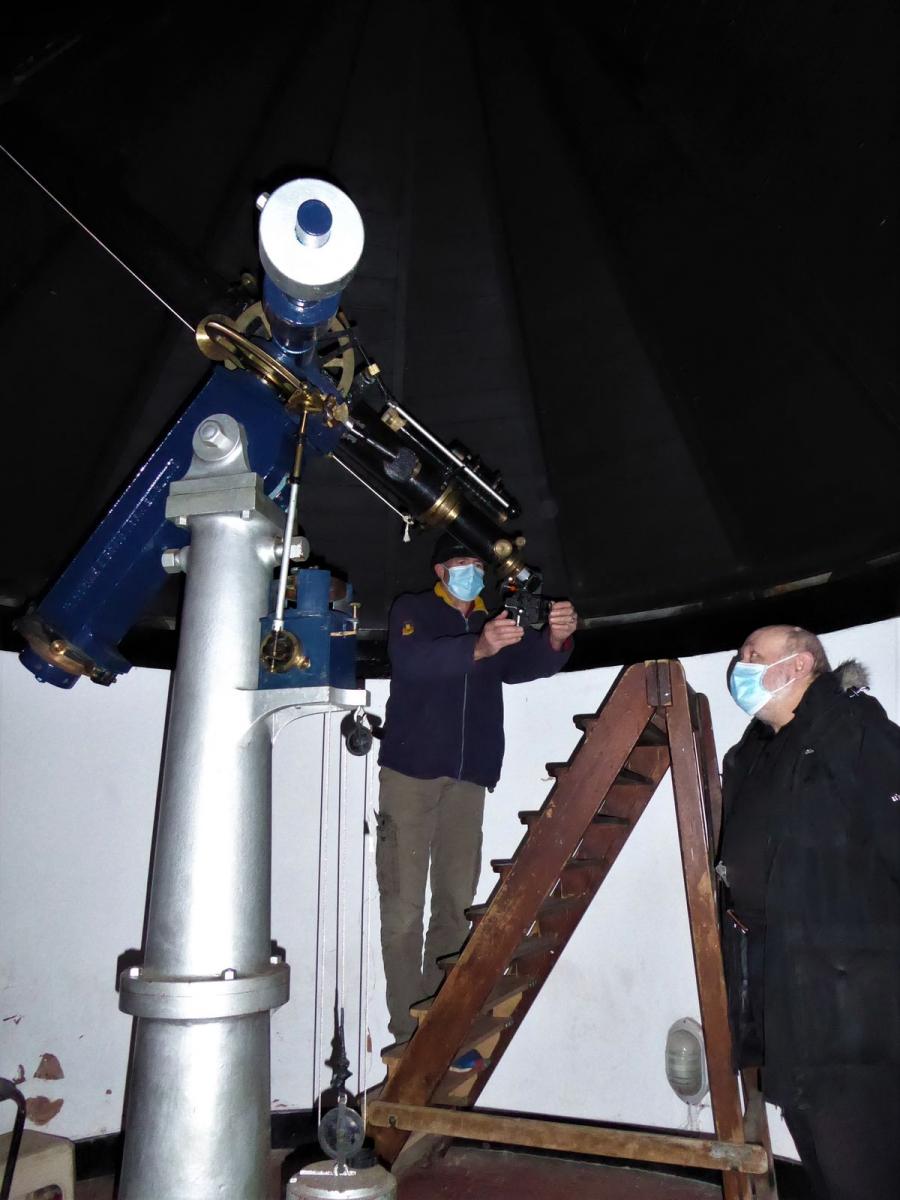
WDAS members and Cooke refractor. (Click for larger image)
The unbranded ED eyepiece - one we regularly use at star parties, delivered solid results, the view of Jupiter quite detailed. The 10mm 68 -degree Hyperion was noticeably sharper, more defined still, with better contrast. Finally, the 11mm 82-degree ES eyepiece gave a view not dissimilar to the unbranded 12.5 mm plossl. They say two eyes are better than one, so 3 pairs of eyes should come to some agreement, and we all agreed on which eyepiece was the clear winner, the Hyperion.
This came as a surprise and offers up a most telling and invaluable insight into eyepiece function and performance. The previous evening Mark had used these same eyepieces with his Altair Astro 125 ED f7 refractor, viewing Jupiter under very similar sky conditions. In this test the 11mm ES 82 degree performed outstandingly, giving stunning views. The Hyperion performed no better, or worse than some of the other examples employed - including several stock unbranded ones. Yet with the Cooke refractor, it yielded the most pleasing image.
This all relates to how eyepiece lens’ are constructed and positioned within their housing, and coupled with other criteria, including instrument focal lengths, can deliver differing results.
Conducting a side-by-side evaluation in this manner also yielded some interesting conclusions regarding some of the ‘cheaper’ unbranded design eyepieces. In long focal length instruments, although perhaps giving restrictive views, they can give quite satisfactory results, though less so with faster focal ratio instruments where some just don't cut it.
Choose your observing ‘weapons’ carefully then, it can make all the difference, from so-so views, to stunning ones.
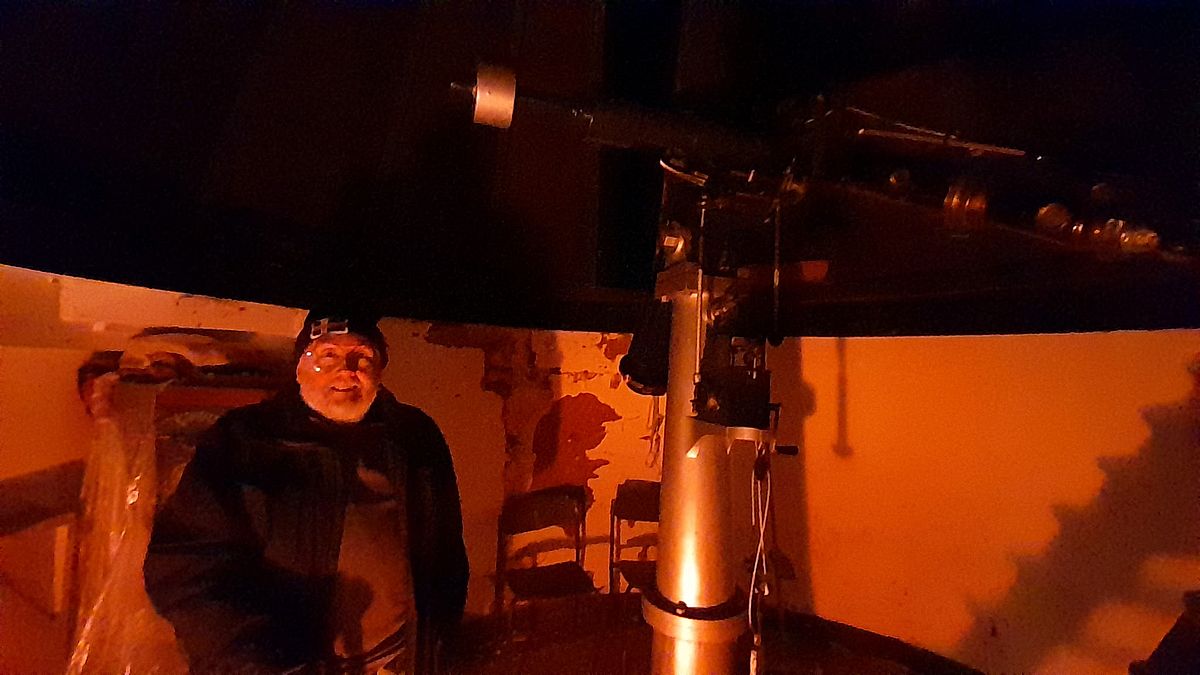
'red light mode'. (Click for larger image)
For the final 'open night' of the season on April 12th, skies had been clear, right up until the last minute before going to the observatory, when a cloudbank appeared from nowhere and 'sat' over Whitby for 40 minutes or more. By the time skies had cleared, it was decided it was probably too late to be going up. There will be other occasions.
Please note, the Bruce observatory will now be closed until early autumn.
- Log in to post comments
