
WDAS members staffed the Dark Sky Station (DSS) facility at Danby Lodge on several days during late June. The first session, on June 19th, saw Paul Wood, John McCue, Mark Keith and Richard meet the public, test equipment and address a few telescope 'parking' issues. Plans for the August 12th solar eclipse event were also discussed, investigated and developed, and an initial rota for staffing the DSS was provisionally agreed.
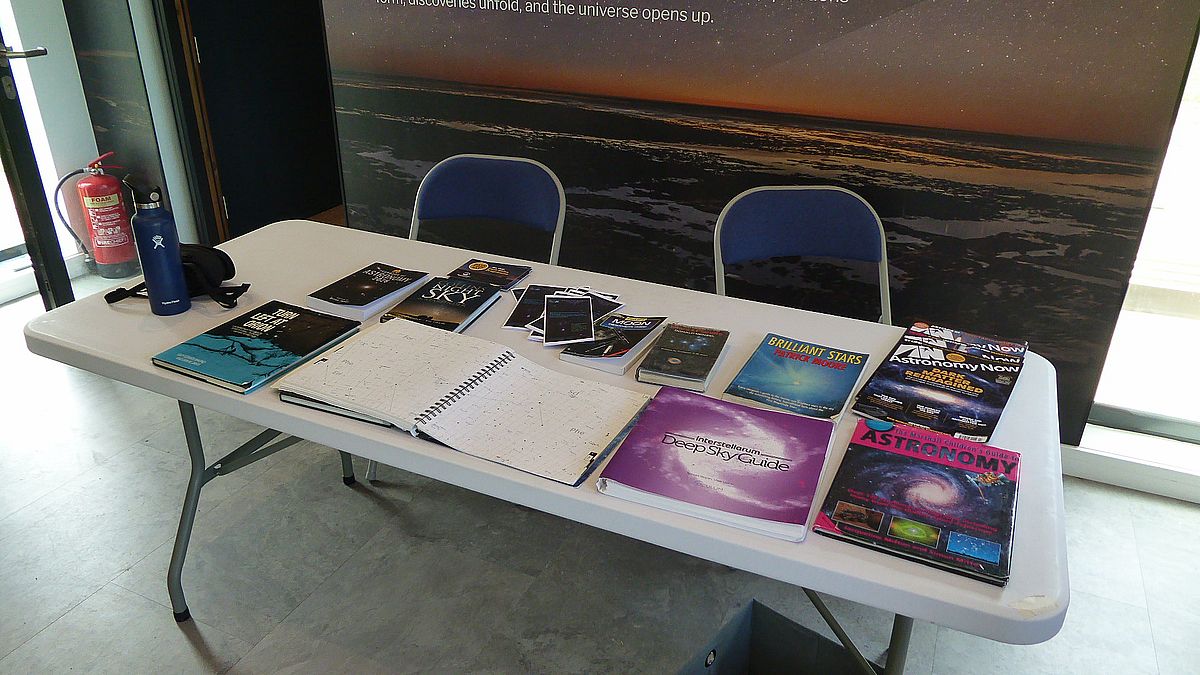
The book display table.
Image - Mark Dawson. (Click for full image)
Mark and Keith were on hand again joining Paul Wood and John McCue on a hot and humid June 26th, Keith taking the opportunity to undertake some solar viewing utilising his Coronado solar scope.
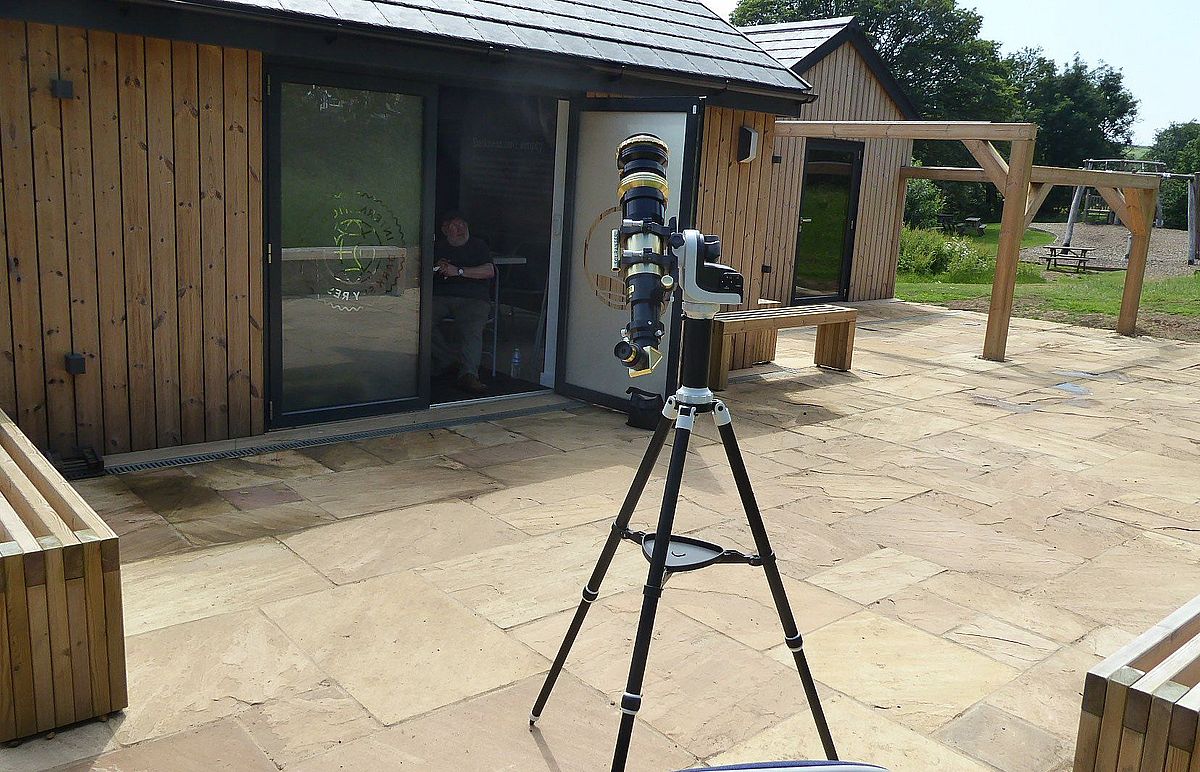
Keith's Coronado solar scope set up outside the DSS at Danby Lodge.
Keith sheltering out of the sun! Image - Mark D. (Click for full image)
Solar activity was lively, with several clear flares visible around the Sun’s limb, especially near the 7 o’clock and 2 o’clock positions when treating the solar disk as a clock face. The view also showed considerable activity across the disk, including additional flares and possibly a prominence.
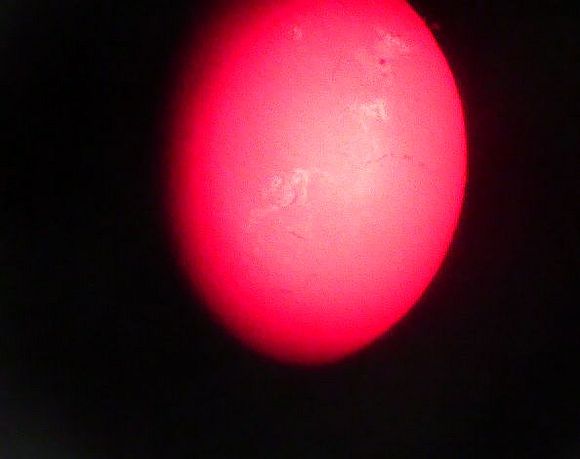
Snapshot through the eyepiece. Activity on the face and limb can be discerned.
Note solar flare top-right. Image Mark D.
Mark and John tried taking a few eyepiece snapshots with their phone cameras, while Mark also used his compact camera. The process was tricky and the results were not spectacular, but some detail was captured.
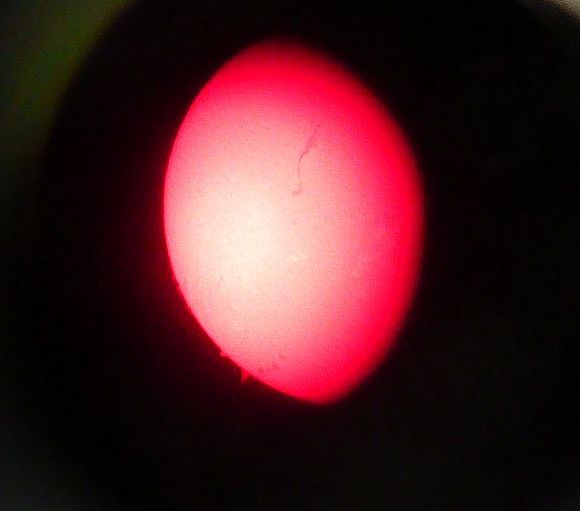
Another snapshot through the eyepiece, note the flares lower left limb.
Image Mark D.
John McCue then remembered he had a basic webcam in his carry bag and suggested trying it. After Keith fine-tuned the solar scope, the resulting image was surprisingly good for a first attempt. This raised the possibility of placing the solar scope inside the telescope room and feeding a live image to the TV monitor, an arrangement to test on the next visit, preferably in cooler conditions.
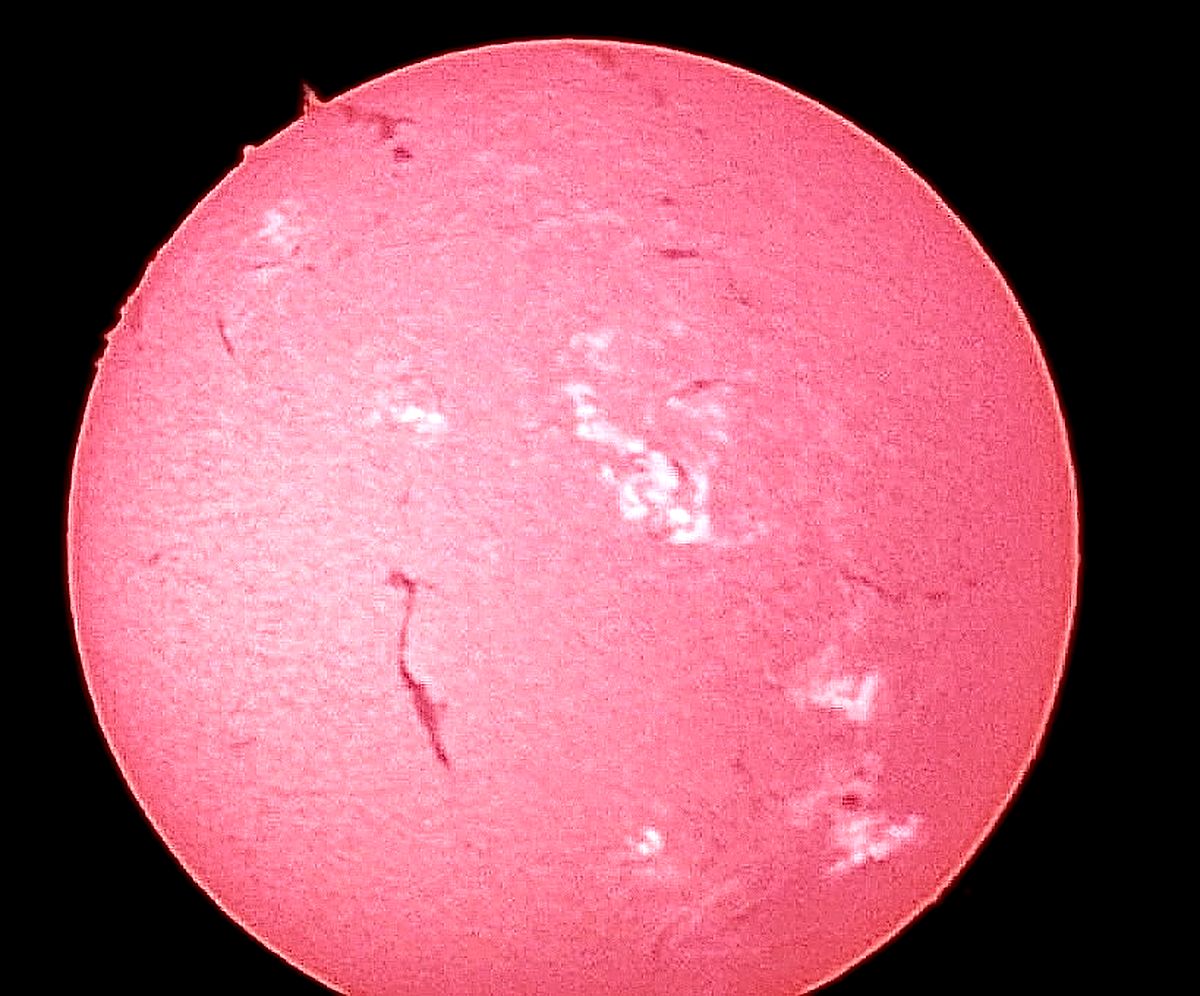
Basic webcam raw image through solar scope revealing solar flares, granulation on surface and sunspot regions. (Click for full image)
After noting the solar activity in H-alpha, Mark observed the Sun with his own refractor and neutral density solar filter a few days later. Several impressive sunspot groups were visible, and he captured a few eyepiece snapshots with a compact camera. Although the active Sun suggested an increased chance of aurora, checks over the following days showed only low activity. It is still worth monitoring, however, as aurorae can be seen from UK latitudes even in high summer.
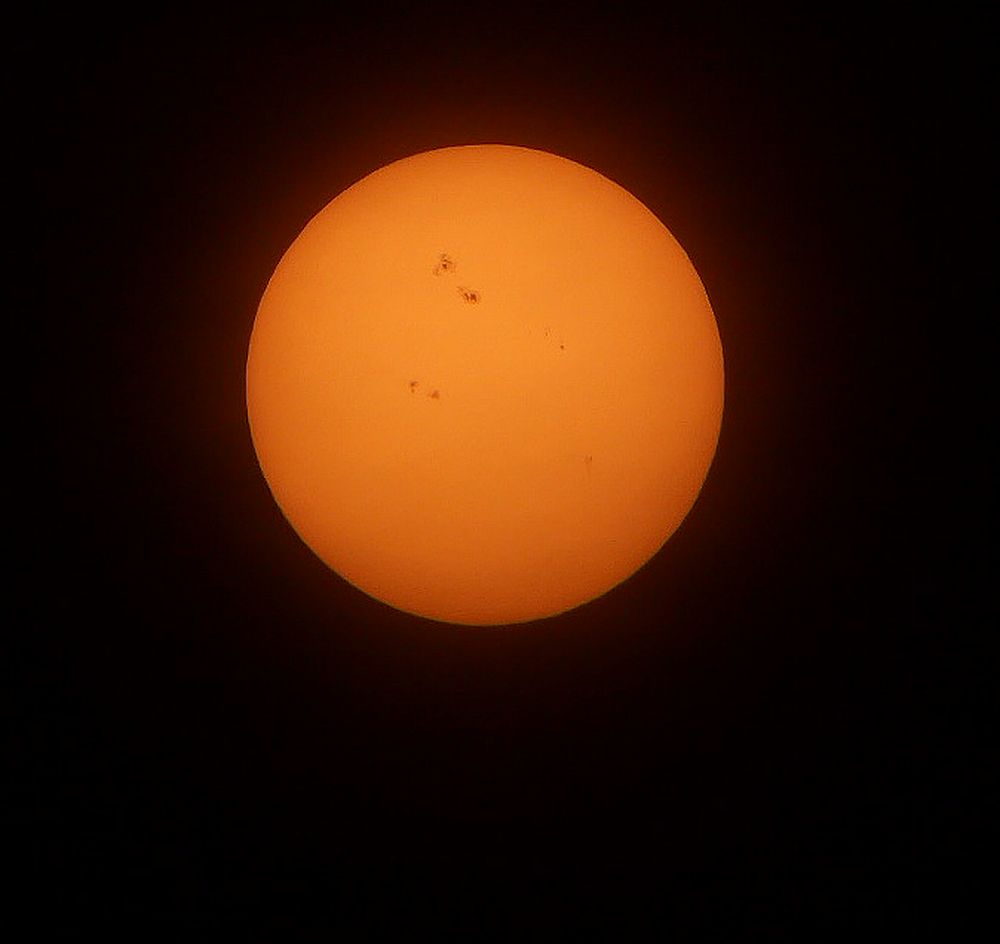
The solar disk on June 28th - 16:00hrs complete with sunspots using a neutral density glass filter on a F7 130mm refractor. Image - Mark D using hand-held Lumix compact camera on sunset setting - bizarrely. (Click for full image)
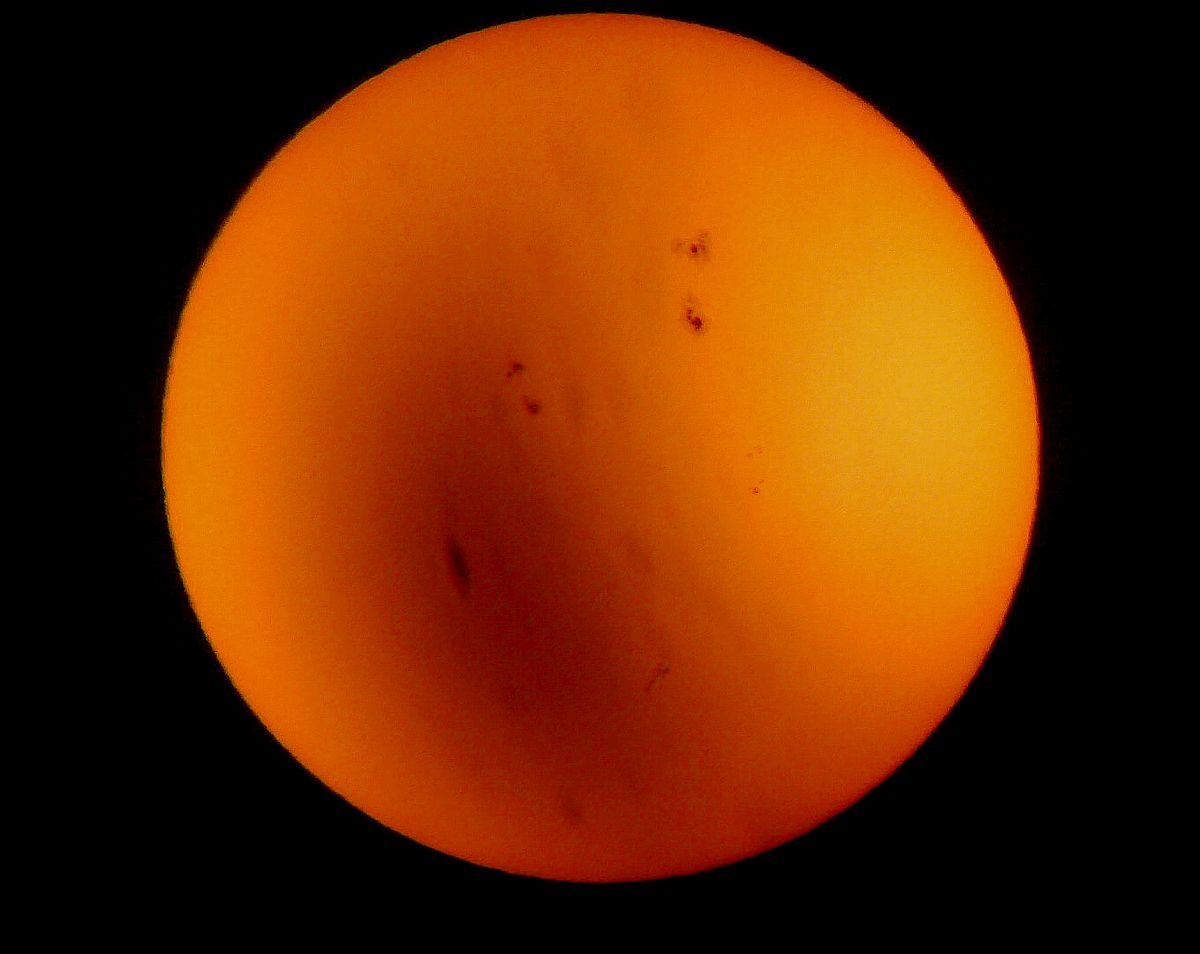
A slightly higher magnification revealing more detail around the sunspot groups. Image - Mark D using Lumix compact camera. (Click for full image)
Alongside the solar observing and imaging at the DSS, visitor numbers were modest but higher than on the previous Friday. Some visitors came specifically to learn more or ask questions, and several useful contacts were made.
WDAS members will continue staffing the DSS throughout the summer, usually on Fridays and occasional Sundays, from 11:00am to 3:00pm.
- Log in to post comments

